BRAND ARCHITECTURE EXPLAINED: MODELS & REAL-WORLD EXAMPLES
As businesses evolve, they inevitably face new challenges, especially when expanding into unfamiliar markets with fresh products or new services. One of the most common hurdles in branding during this phase is figuring out how to introduce these new offerings without confusing or alienating an existing audience.
Throughout a brand's life cycle, launching new products and services is an inevitable natural progression. However, these additions often target different customer bases, making it tricky to present everything cohesively under one single brand. That's where brand architecture comes into play.
Brand architecture serves as a way to define how different products and services fit within a brand's ecosystem. When done well, it provides clarity (both internally and externally) by outlining the relationships between offerings and showing how everything under a brand connects within a unified identity.
There are several types of brand architecture models, each tailored to specific needs for different scenarios. But before diving into those details, let's start with the basics. Let's get an idea of what brand architecture really is, and why it's so crucial to get it right in the first place.
What is Brand Architecture?
Brand architecture is the strategic framework that organises a company's brands, products, and services. Think of it as a hierarchical system that defines the relationships between the overarching master brand (often the corporate brand) and its associated sub-brands and offerings underneath.
A useful comparison to think of when thinking of brand architecture is a company's operational team structure. The master brand functions like a C-Suite team at the top, setting the vision, voice and tone for everything within the business. This is the primary brand. Beneath them are the management levels that guide and influence more specific functions. These are representative of secondary brands. Further down, you then have additional tiers for senior and junior staff which are comparative to tertiary brands.
The primary brand is nearly always the corporate brand. The secondary brands can be either individual sub-brands or can be secondary parent brands to further sub-brands of individual services or product variations within a product line (tertiary brands). Each level has a very distinct role contributing to the brand's overall mission.

When structured effectively, this hierarchy enables clear brand communication, supports growth opportunities, and ensures that every new or existing product or service fits within a cohesive and scalable ecosystem.
Why Does Brand Architecture Matter?
At its core, brand architecture provides a transparent, functioning roadmap that conveys how different brands, products, and services connect within a broader strategic business vision. By establishing these relationships upfront, it eliminates confusion and ensures that audiences - whether they're customers, clients, or employees - can easily understand how everything fits together and where their intended entry point to a brand should be. It's more than just an internal tool, it's a powerful communication asset that helps to direct audiences.
When aligned with a wider brand strategy, brand architecture builds a unified identity, one that can be effectively and consistently applied across all touchpoints seamlessly. It doesn't just organise, it enhances.
Businesses that implement an effective brand architecture can expect to unlock the potential to gain a range of benefits that include:
Simplified marketing approaches
- Defined structure will help plan marketing strategies more efficiently. It can allow businesses to lean on established brands or products for further credibility and remove the need for a brand new standalone strategy to be built from the ground up.
Reductions in reputational risk
- Brand architecture can allow businesses to isolate particular brand areas within the larger structure to protect an overarching master brand. This can prevent any negative issues that arise from poor performance in a sub-brand further down the hierarchy, from affecting the broader reputation higher up.
Growth in brand equity
- With the right brand hierarchy, audiences are given the opportunity to form positive associations with each brand within an ecosystem. In turn, this elevates the reputation of the master brand by reinforcing credibility and fostering customer trust through its structure.
Smoother customer experience
- Defined structure allows audiences to navigate a company's ecosystem with confidence. It also allows for people to understand exactly what they're looking for and what they're getting. It also highlights an optimal, streamlined path through a user's purchase journey.
Enhanced business strategy
- Businesses that lack a solid foundational brand architecture often make groundless decisions. With the right structure, strategic decision making becomes simplified and it's easier to assess where investment and resources are required most within a brand's ecosystem.
The Three Key Elements
Before we look at the models of brand architecture, it's also important to understand the crucial elements that feature at the core of them all - some of which we have mentioned already. Let's define these before moving on:
Master Brand
- A master brand is the primary brand that is associated with a business. It is most typically the corporate brand which represents the entire business and is most intrinsically linked with the core service or product that the business offers.
Parent Brand
- A parent brand is defined as a brand that manages or represents a range of individual products or services that fall beneath it. Its focus is on managing different sub-brands or products. This can also be defined as an 'Umbrella Brand'.
Sub-brand
- Sub-brands are secondary or tertiary brands that are positioned under master or parent brands within a brand architecture. These are also known as 'child brands'. They'll retain their relationship with the brands on the levels above, but will usually have their own individual strategies and identities that set them apart.
Core Brand Architecture Models
Even though there is no one-size-fits-all blueprint, there are various approaches that can be adopted to help organise and guide a multi-brand strategy for businesses. These are the core types of brand architecture models:
Branded House Model
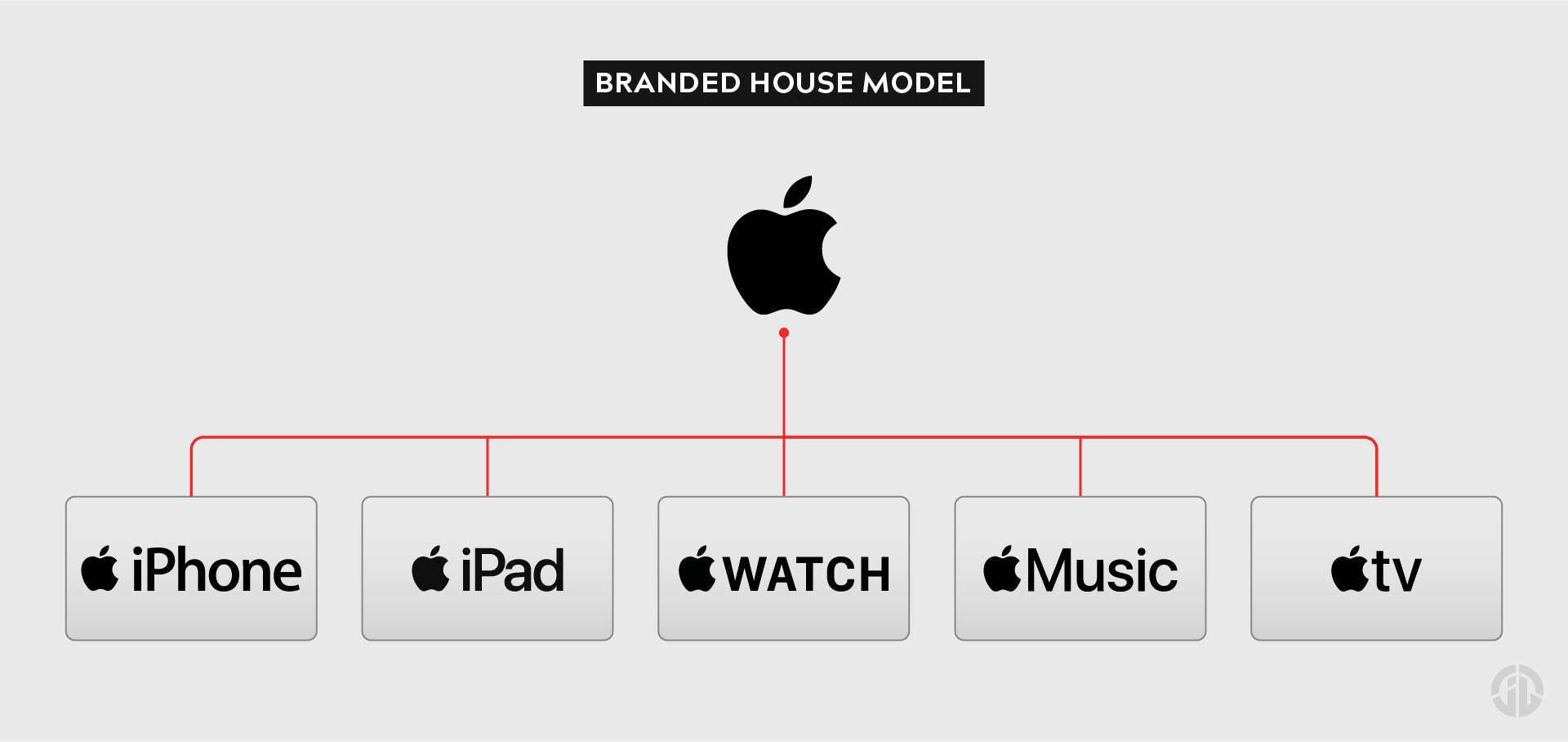
Within a Branded House model, the business serves as the master brand. All sub-brands and products then fall underneath, within the singular master brand name and identity. This model usually incorporates the master brand name, logo or elements of the core identity to tie everything together. It is one of the most recognisable and popular models across the world.
A perfect example of a Branded House model is Apple. Apple has an iconic, well-established and immediately recognisable master brand that is implemented across their full product ranges, no matter the market area. It reinforces the brand's hugely successful reputation to leverage its products individually within markets, and gives its customers instant expectation for their products and services that match the reputation of the master brand.
Advantages of the Branded House Model:
- Strong brand recognition
- Eliminates confusion
- Cost efficient marketing practices
Disadvantages of the Branded House Model:
- Reputational risk possibilities
- Less flexibility for unique positionings
- Reliant on a successful, thriving master brand
House of Brands Model
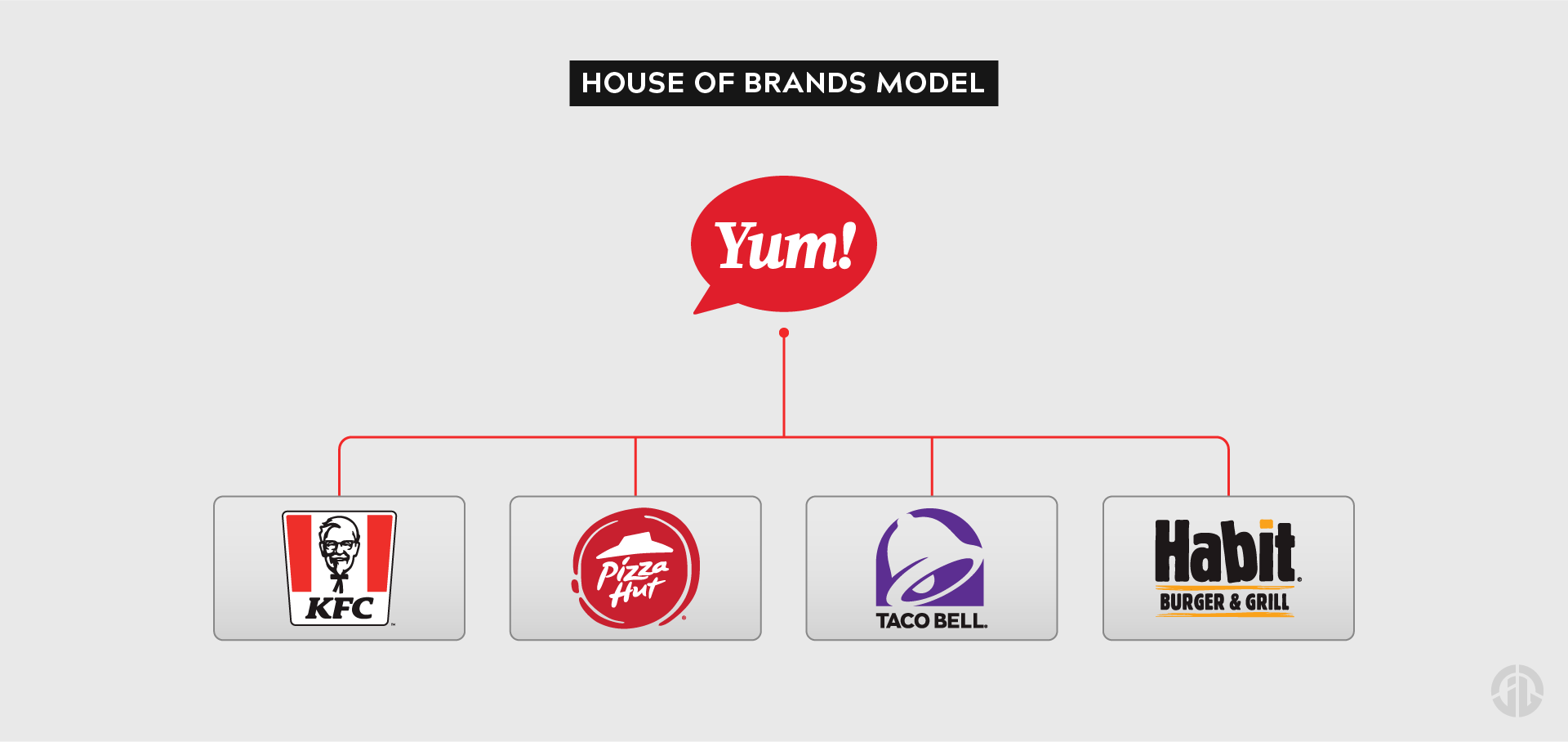
The House of Brands model is exactly how it sounds. It's a model where a master brand houses a collection of unique parent or sub-brands within, who each operate independently with their own strategies, identities and marketing approaches. It also isn't uncommon for businesses who utilise a house of brands model to keep their master brand hidden away as a less-public entity that instead plays a background role outside of customer-facing activity.
One of the best examples of a House of Brands model is Yum!. You may not have even heard of the master brand, but you have certainly heard of its sub-brands: KFC, Taco Bell, Pizza Hut and The Habit Burger & Grill. They're all prominent, very distinct brands that have different voices, identities and positions within the same market space, but they all fall under the same corporate vision and objectives that Yum! set above.
Advantages of the House of Brands Model:
- Allows for targeted marketing for niche markets
- Minimises risk for master brand and other sub-brands
- Greater opportunity to invest in or acquire new brands
Disadvantages of the House of Brands Model:
- Elevated branding, legal and marketing expenses
- Potential for consumer confusion if communication isn't perfect
- Brand strategy and awareness needs building for each brand from scratch
Endorsed Brands Model
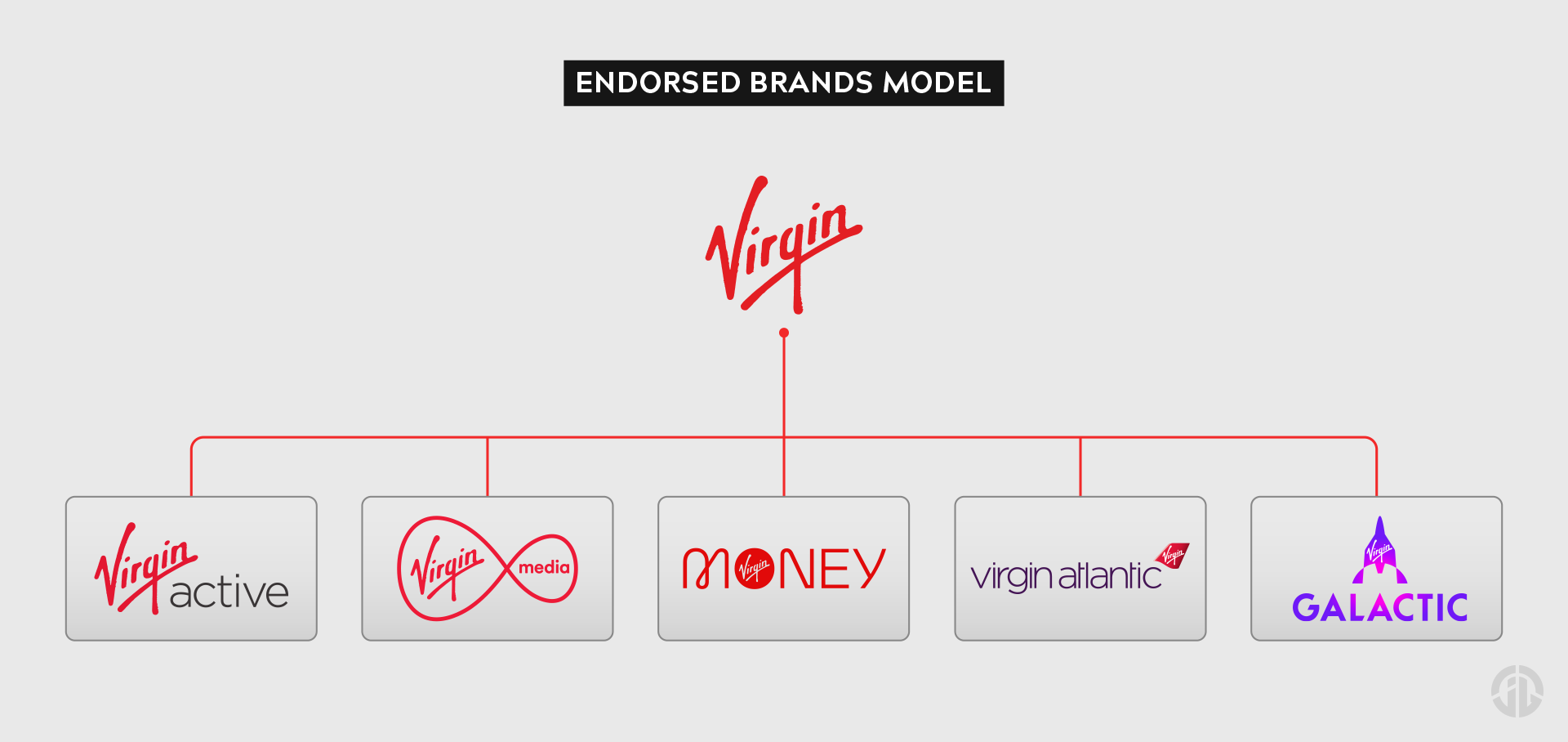
An Endorsed Brand model is a more flexible way of packaging brands. It is where sub-brands retain their unique strategies and identities, but then draw credibility and recognisability from an endorsement through their master brand or parent brand. Brand elements such as master brand names or logos can appear within a sub-brand's marketing, acting as brand extensions that provide the benefits of its equity.
Virgin's brand architecture is the best example of an Endorsed Brand model. All of their sub-brands are created without being separated from their master brand yet feature its identity in some way or another. Unlike the House of Brands model, this model clearly signifies the master brand behind the product or service, and unlike the Branded House model, they all possess a different look and feel from their master brand as well as operate independently.
Advantages of the Endorsed Brands Model:
- Gains reputation from the master brand's reputation
- Provides room for sub-brands to have unique positioning
- Plenty of cross-marketing and cross-selling opportunities
Disadvantages of the Endorsed Brands Model:
- Allows for targeted marketing for niche markets
- Minimises risk for master brand and other sub-brands
- Greater opportunity to invest in or acquire new brands
Hybrid Brands Model
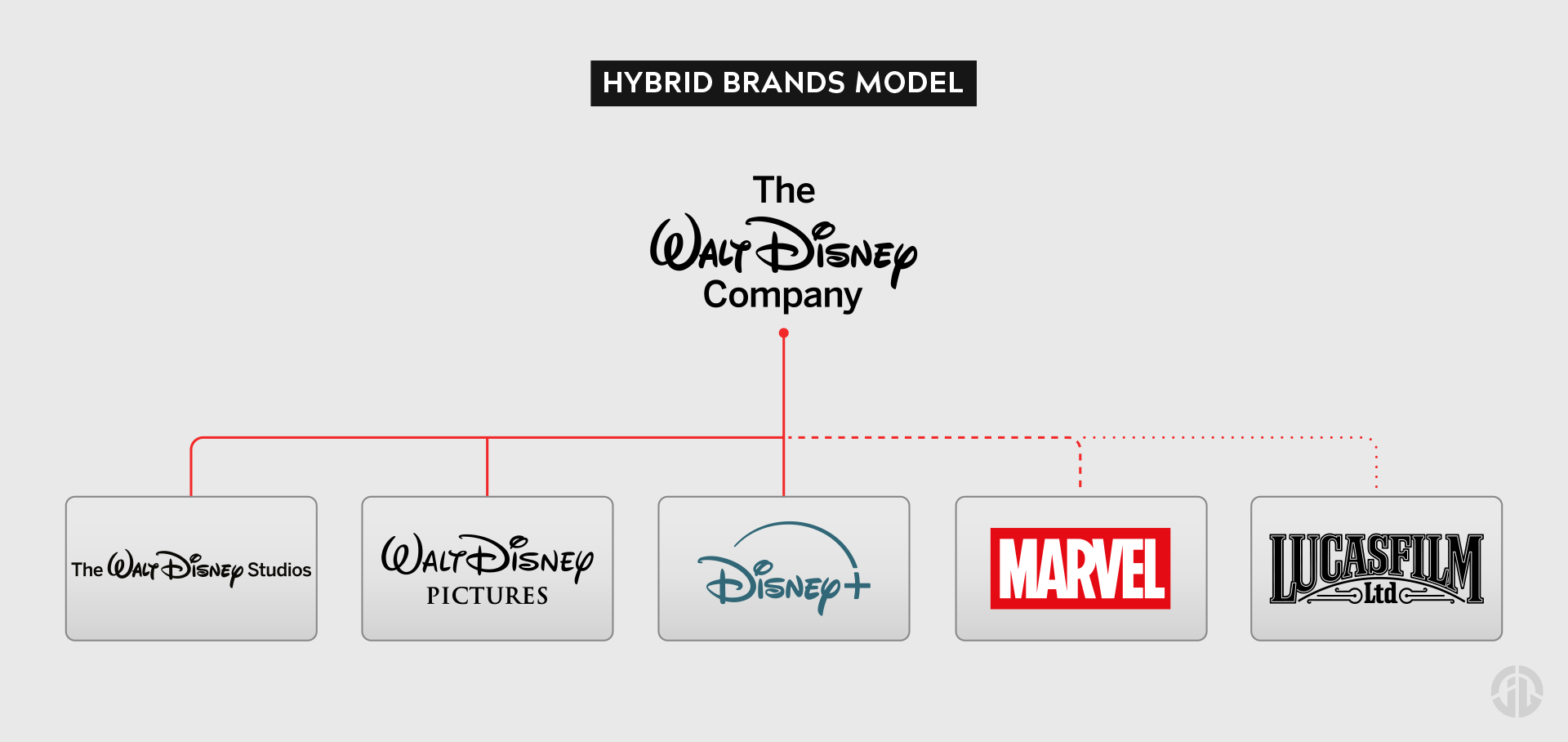
A Hybrid Brands model is a combination model. It features elements of the Branded House, House of Brands and Endorsed models, finding an even middle ground between them. It is simply the combination of multiple brands with different goals and approaches, all under one umbrella. Some sub-brands can be linked to the master brand, while others might be endorsed or remain independent. It is a common approach for very large corporations with incredibly broad and very different offerings.
The Walt Disney Company is the prime candidate to show this model off. In one instance, they're using the Branded House approach for their production studios in Walt Disney Studios and Walt Disney Pictures. In another instance, they're using independent brands from the House of Brands model for other entertainment brands such as Lucasfilm, Marvel Studios, and FX. Then again in another instance, they are utilising an endorsement approach for their experiences and platforms with their Disney Vacation Club, Adventures by Disney, Disney Channel and Disney+ ventures.
Advantages of the Hybrid Brands Model:
- The advantages of the other models
- Accommodates acquisitions that don't fit into an existing area
- No set rules for approach
Disadvantages of the Hybrid Brands Model:
- The disadvantages of the other models
- Very complex nature to manage
- No set rules for approach
How to Build Your Brand Architecture Model
There is a lot of information to digest when it comes to finding your own brand architecture model, especially when it comes to weighing up the advantages and disadvantages each has to offer. As stated earlier, there isn't a one-size-fits-all model, and every business will have its own unique audiences and objectives which need careful consideration.
Designing or re-defining a brand architecture requires a full understanding of a brand strategy and the approaches that are already implemented. If you are looking to undertake this process, you should be able to follow a four phase approach to help identify and build the hierarchy that best suits your brand.
Phase 1 - Research
- An audit needs to take place primarily to list all current brands, sub-brands, services and products. You will need to identify how each of these are targeting audiences and how they are perceived by your audiences. Any user or research data you possess will be useful here to help guide your decisions. You'll then need to determine your business objectives with each of these items in mind into short-, mid- and long-term goals to enable you to move into Phase 2.
Phase 2 - Strategy
- With your audit and research data in hand, this is where you will begin to decide if centralising your brands, separating your brands, endorsing your brands or hybridising your brands is the best fit your objectives. You'll need to ensure that you understand the associations you want your sub-brands to have with their parent or master brand, understand your marketing vision for each of your sub-brands, and understand how your sub-brands interconnect and can seamlessly work together. Answering these questions will begin to provide you with clarity on the direction you should be taking. You should also be realistic and honest about your budget and the resources you have available, and your strategy should be a reasonable reflection of what you and your business can effectively manage with careful forethought on growth for the future.
Phase 3 - Preparation
- At this point, your brand strategy, research and architectural model should all be decided. You should be at a stage where you're ready to get to work designing, redesigning, or reorganising your assets to reflect your new strategy. This could be creating new brand strategies and identities for your sub-brands to align with new objectives, rebranding your master brand, or it could be refreshing and updating materials and guidelines to align with the new approach. Your 'to-do' list with regard to the specifics of design will most likely reveal itself when reflecting back on your strategy. This entire phase will entail getting everything in order into a launchable state for Phase 4.
Phase 4 - Implementation
- When your materials are ready, this will be your full-scale rollout of the chosen architectural structure across all of your communications, marketing materials, assets, internal documents and anything else related to your strategy. Everything from here on out should be aligned with the same strategy identified within Phase 2. You can use this phase to monitor and evaluate your brand performance by gathering further data to decide which brands can have their own autonomy, and which brands may require further support of better integration within your architecture.
In Conclusion
Getting your brand architecture right isn't an optional branding exercise. It's a strategic decision that impacts everything from basic communication and marketing, right the way through to acquisitions and mergers into the future. No matter what route you take, clarity is key.
With the right approach to your structure, you can unlock sustainable success that extends the longevity of your brands and products rather than weakening or losing your position with ad hoc, retrofitted decision making. Select your architecture carefully and the appropriate model can enable proper growth and lead to new opportunities that you didn't realise were available before with the right ongoing support.
If you're looking for further information or would like assistance in figuring out a brand architecture model for you, head over to my contact page and reach out today. I'd be happy to collaborate and guide you through the process.